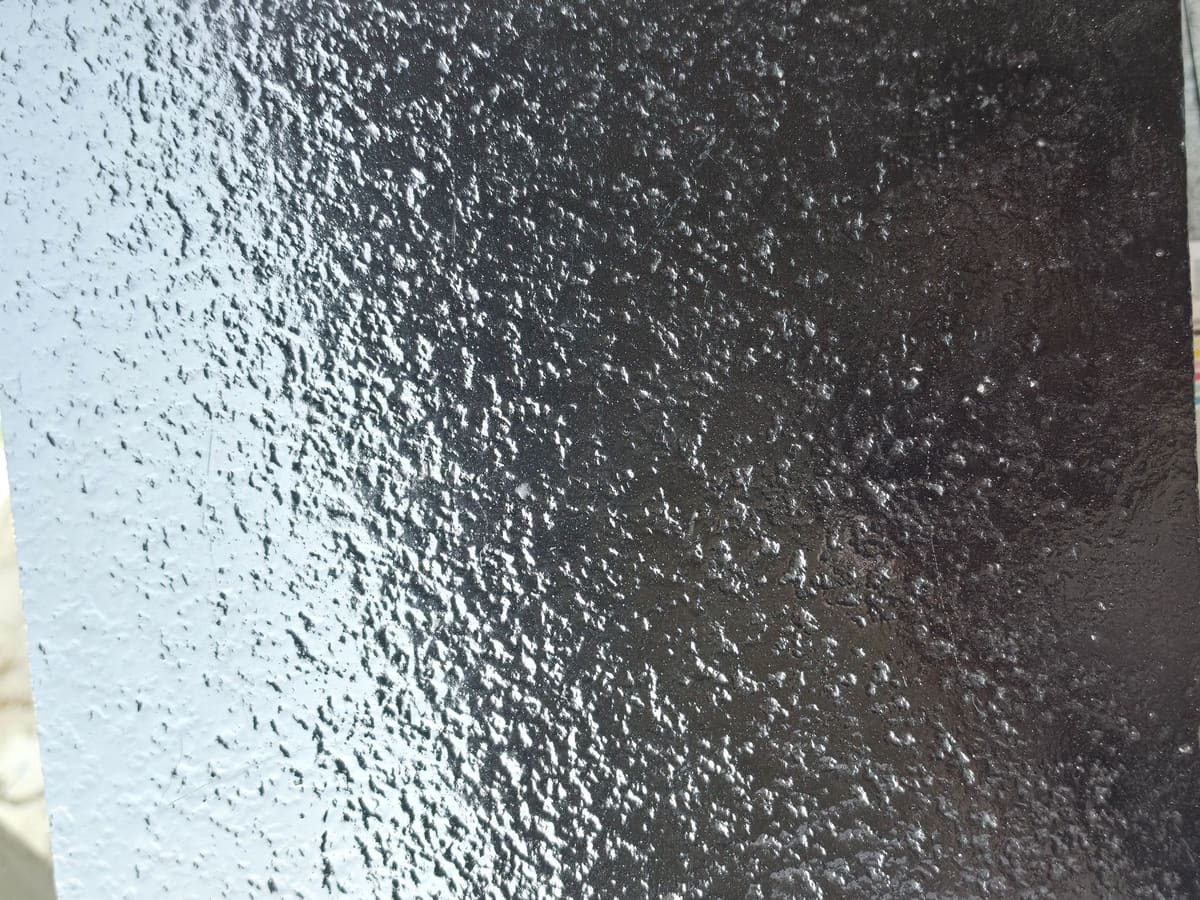
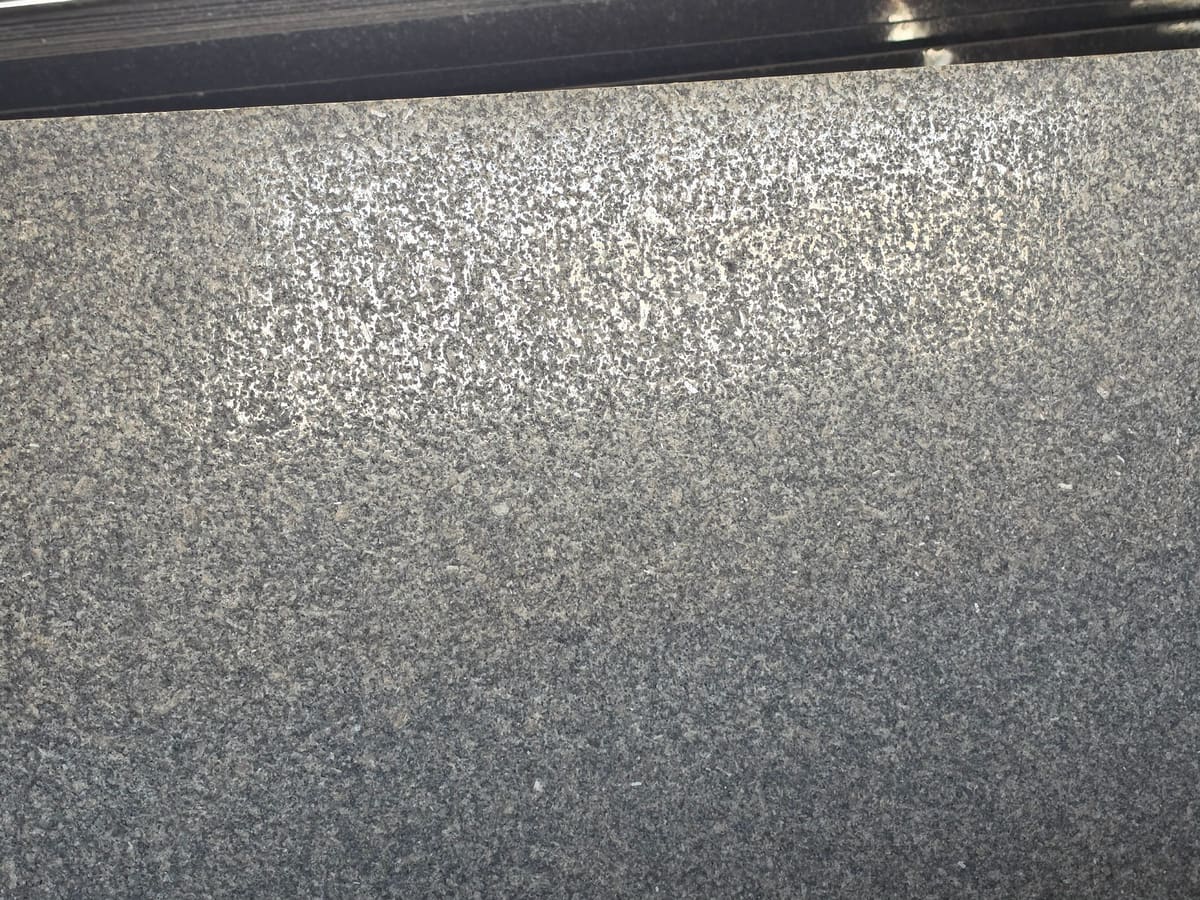
Polished, leather and flamed granite finishes
6 minute read, updated 13 October 2026
Four finishes, one stone
The finish is what happens to the face of a slab after it is sawn. The stone underneath is the same; only the surface changes, and with it the colour you see, the grip underfoot, how it cleans, and how it hides marks. The same black block could, in principle, come out of the factory looking like four different stones.
How each one is made
Polished is the familiar mirror. The sawn face goes under a line of abrasive heads, coarse to very fine, and ends with a buffing stage. The surface is ground flat and closed up until it reflects. It is the finish that shows the true depth of colour and the full pattern.
Honed stops short. The slab goes through the same line but comes off before the fine heads, leaving a flat, smooth, matt face with little or no reflection. Fingers feel it as smooth; the eye sees it as soft.
Leather, called lapatro in the trade, starts with a roughened face, either honed or lightly flamed, and then runs it under rotating abrasive brushes. The brushes soften the high points and leave the low points matt, giving a gently dimpled surface with a low sheen that looks and feels a little like worn leather. Black Lapatro is black granite in this finish.
Flamed means the sawn face is passed under a very hot flame. The quartz in the stone expands and the top layer pops off in flakes, leaving a rough, matt, slightly crystalline face. It is then washed and sometimes lightly brushed. The flame also lightens the colour and can alter it; some stones go greyer or pinker.
How they look on dark and light stone
On black granite the difference is large. Polished black is the deepest black you can get from stone; the mirror hides the grain and reads as a solid dark plane. The same stone honed reads as charcoal grey, because the matt surface scatters light instead of absorbing it. Flamed black is lighter again, a speckled grey. Leather sits closest to polished in depth: it keeps most of the black while losing the mirror.
On browns, greys and figured stones the shift is smaller but real. A polished face shows pattern at full contrast, which is what you want on a figured stone like JD Figurative or Teak Rainbow. Honed and leather soften the contrast and make the stone look calmer. Flamed flattens pattern almost completely and suits plain stones better.
Look at the actual slab in the finish you are buying. A polished sample does not show how the same stone will look in leather.
Why leather hides fingerprints and scratches on black
A polished black surface is a mirror, and a mirror shows every interruption. A fingerprint is a film of oil that scatters light; on a mirror it stands out. A scratch is a tiny groove that catches light from one direction; on a mirror you see it as a bright line in raking light.
A leather face is already broken up into thousands of tiny highs and lows. A fingerprint on it has nothing uniform to interrupt. A fine scratch is lost among the texture. Water spots and the hazy film that builds up on polished black between wipes are far less visible. The texture is no harder than polish, but it hides damage better. This is why Black Lapatro suits a kitchen where polished Madka Black or Telephone Black would show every mark.
Slip resistance
Polished stone with water on it is slippery, and in the monsoon that includes any outdoor polished surface. Honed is better. Leather is better again, because the texture breaks the water film. Flamed is the grippiest of all and is the right finish for outdoor steps, ramps, pool surrounds and driveways.
For a bathroom floor, honed or leather, or a polished floor with a mat where feet are wet. For external steps, flamed, or leather if the steps are under cover.
Cleaning and daily living
Polished is easiest to wipe: nothing holds dirt. Its weakness is that it shows everything.
Leather holds a little more. Near a hob the dimples collect oil and a damp cloth does not reach the bottoms; a soft brush and a neutral cleaner now and then keep it even. Because the surface is more open, leather usually needs sealing at installation and benefits from re-sealing more often than polished (the water test in the kitchen guide applies).
Honed on light stone shows oil darkening more than polished does, because there is no gloss to mask it. Seal it and wipe spills promptly.
Flamed collects dust and algae outdoors and wants a stiff brush or a pressure wash a few times a year. Indoors it is not a practical counter finish.
Where to use each
Kitchen counter: polished for the fullest colour and easiest wiping, leather for black granite that must stay looking clean. Both work.
Outdoor areas, steps and ramps: flamed. Leather under cover.
Bathroom: honed or leather floors; polished walls and vanities.
Wall cladding and feature walls: polished where you want drama; honed or leather for a softer, more architectural look.
Flooring indoors: polished in living areas; leather where you want less glare and less visible wear.
How finishes age
All four are the same stone and wear at the same rate; what changes is what you notice. A polished floor in a doorway dulls where feet turn. A leather floor in the same place slowly polishes itself smooth under foot traffic. Flamed steps soften over years and lose some grip. A polished counter can be re-polished; a leather one can be re-brushed; both are factory jobs.
Before you order
Confirm the finish on the order, see the slab in that finish, and decide the edge profile at the same time. Any edge cut on site on a leather or flamed slab will be a sawn edge and will need finishing to match, which is easier to arrange before the slab leaves the yard.
Questions people ask
- Does a leather finish need more sealing than polished?
- Usually yes. The texture leaves more open surface, so oil and water go in faster. Seal it at installation and test with water each year.
- Will a black leather-finish counter look as black as polished?
- Nearly, but not quite. Any texture lightens the apparent colour. Leather keeps most of the depth; honed reads charcoal and flamed reads grey.
- Which finish is safest for outdoor steps?
- Flamed. It stays grippy when wet. Leather is acceptable under cover; polished steps outdoors are a hazard in the monsoon.
- Can a polished slab be converted to leather later?
- Only at the factory, by brushing the whole face. It is not something to do on site, and a cut edge on a leather slab has to be re-brushed to match.