How to match granite and marble slabs from one lot
6 minute read, updated 13 October 2026
What a block is, and what a lot is
Stone comes out of the quarry as a block: a rough rectangular lump, usually several tonnes, cut from the quarry face with wire saws. At the factory the block is sawn into slabs, and the slabs come off in the order they sat in the block, numbered one, two, three and so on. (See the guide on slab thickness for how a gangsaw and a cutter do this.)
A lot is the set of slabs from one block, kept together and sold together. Sometimes a lot covers two or three blocks from the same part of the quarry if they are close in colour, in which case the slabs should be marked by block as well as by number. When you buy for a job, you want all of it from one lot, and you want the slab numbers.
Why colour shifts between blocks
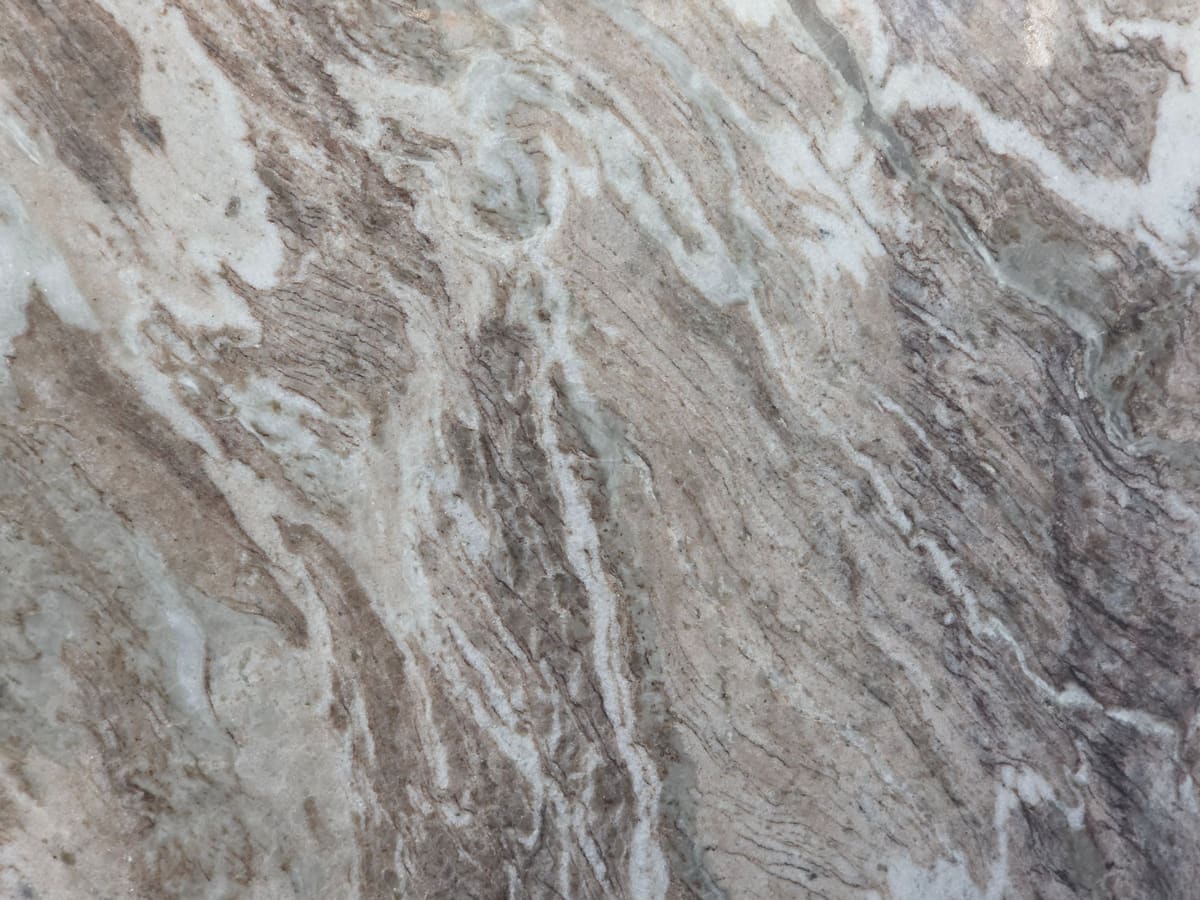
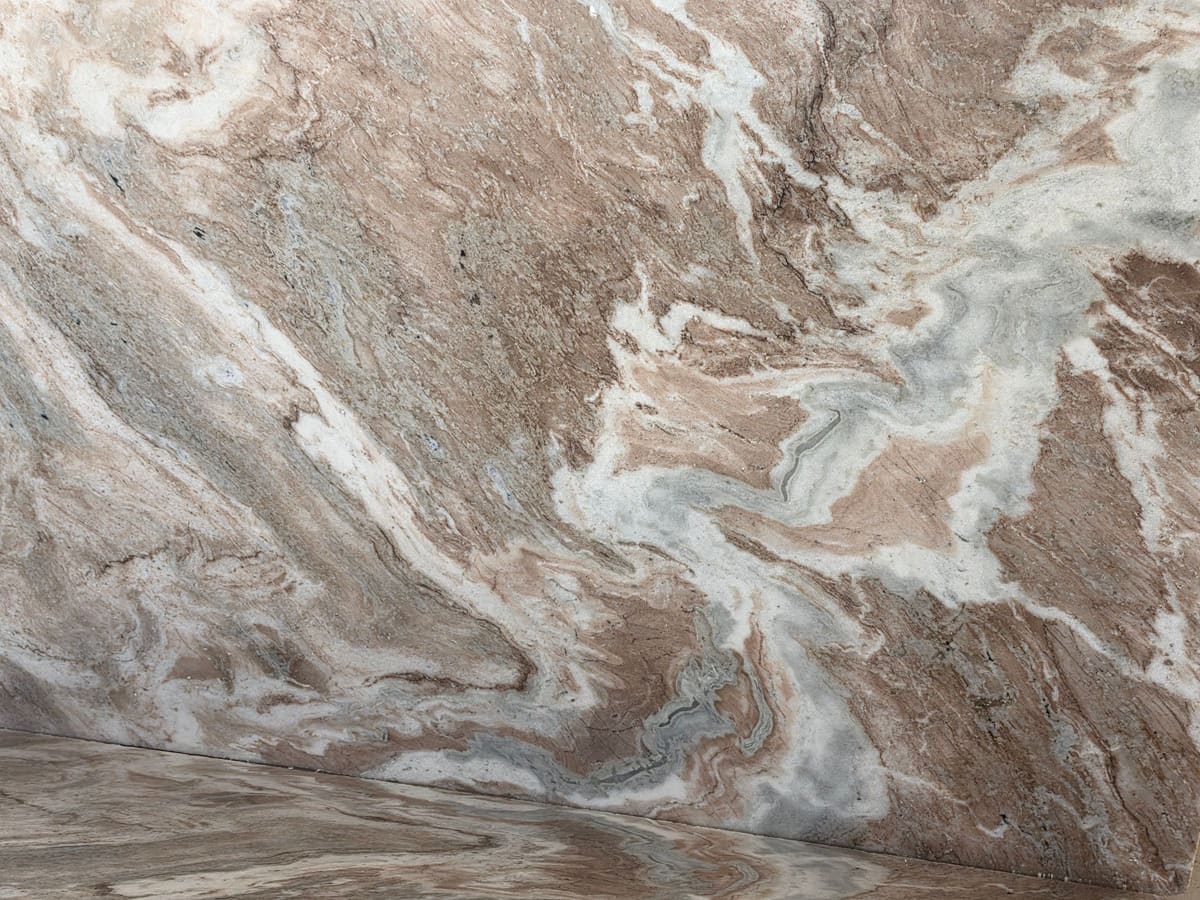
Mineral content, grain size and vein pattern change from one metre of rock to the next, so two blocks of the same stone from the same quarry can differ noticeably in tone. The name on the slab tells you the stone; it does not tell you the shade. Between quarries selling under the same name the difference can be larger still.
Even inside one block there is drift. The first and last slabs are a block’s width apart, and veins that run through the block at an angle sit in a different place on each. Consecutive slabs match closely; distant ones match less. A job that needs a visual match should be cut from consecutive numbers.
Polishing batches add a smaller effect: slabs polished on different days can differ a little in gloss. Ask for a lot that was processed together.
Bookmatching, and why it works
When a saw passes through a block, it leaves two new faces: the back of slab one and the front of slab two. The blade removes only a few millimetres of stone, so those two faces are almost identical, one being the mirror of the other. Polish the back of slab one and the front of slab two, stand them side by side, and open them like a book. The veins meet at the joint and continue as a reflection. That is a bookmatch, and it comes from the geometry of consecutive cutting.
It only works on consecutive slabs, and only if the right faces are polished. Normally every slab is polished on the same side, so a bookmatched pair has to be chosen before polishing, or the factory has to flip alternate slabs. Ask for it when you order, before the slabs are polished. The Kashmiri Brown and Royal Brown pages show bookmatched pairs photographed at the yard.
Four slabs matched as a quad, two pairs stacked for a large wall, follow the same rule.
Bookmatching needs figure to work with. On a veined marble or a strongly patterned granite such as JD Figurative or Teak Rainbow, the mirror is easy to see. On a plain, even-grained stone like Aadhunik Grey or Telephone Black there is nothing to mirror, so it is not worth paying extra for.
Vein-matching for counters and feature walls
A bookmatch mirrors. A vein-match continues: the vein runs across the joint in the same direction, as if the counter were one long piece. This also uses consecutive slabs, but polished on the same face and laid in sequence, so the pattern flows from one into the next.
For an L-shaped counter, decide where the joint falls first, then choose which slab goes on which leg so the vein direction makes sense around the corner. Put the joint behind the sink or hob, where it is interrupted anyway, not in the open run. For a feature wall, lay the slabs out in number order and shuffle only if two neighbours happen to match better than the sequence.
How many slabs to order
Start from the net area, the counter or wall measured in square feet. Add the area lost to cut-outs, joints and edge trims. Then add wastage: ten to twenty per cent over net is usual for plain stone on a straightforward job. For figured, vein-matched or bookmatched stone, allow more, because each piece can only come from one place on one slab, and a wrong cut cannot be recovered from another.
Buy spares at the same time. A lot sells and is gone; a slab from the next block will not match, and a repair in a year’s time will look like a repair.
Lay them out dry first
Before anything is fixed, and ideally before anything is cut, stand the slabs in order in the yard or lay them flat on site and look at them together in daylight. Wet them to see the colour the polish will show. Decide which slab goes where and mark each with a wax crayon: its number, its position (left of sink, island, wall 2), and an arrow for the top. Mark the cut lines on the face. This takes an hour and saves the argument that starts when a mismatched piece is already glued down.
If the slabs are being polished after you have chosen them, for a bookmatch, do the same layout at the factory before polishing, so the right faces are polished.
What to photograph
A phone is enough. Each slab on its own, number visible, wiped down, in flat light. The whole lot standing together, so the shift across the sequence is visible. Close-ups of any fissure, filled area, mesh backing or chipped edge (see the guide on buying granite by the square foot). The dry layout with your crayon marks. The back of any slab you are unsure of. Send the set to the installer before cutting starts.
What to put on the order
Stone name, lot number, slab numbers and count, nominal and minimum thickness, finish, which face is to be polished for a bookmatch, and the measured area. The guide on buying granite by the square foot covers the rest of what belongs in writing.
Questions people ask
- Can I bookmatch any stone?
- Any slab has a mirror neighbour in the block, but it only shows on stones with veins or figure. On a plain, even-grained granite a bookmatch is invisible and not worth paying for.
- How much extra should I order for a kitchen counter?
- Ten to twenty per cent over the net area is usual for plain stone. For figured or vein-matched stone, or anything bookmatched, allow more because pieces can only go one way.
- Can I come back later for one more slab from the same lot?
- Sometimes, if the lot has not sold. Do not count on it. Buy everything for a job from one lot at the same time, including spares.
- Why does slab 1 look different from slab 25 of the same block?
- A block is not uniform through its depth. Colour and veining drift as the saw goes through it, so consecutive slabs match closely and distant ones match less.